In the past, as a means of transportation, the small electric donkey was exclusive to small cities in everyone's impression. In first-tier cities such as Beijing, Shanghai, Guangzhou and Shenzhen, it seemed a little "out of hand", but now, the small electric donkey and motorcycles are at the top of the commuter contempt chain.
The "2022 China Major City Commuter Monitoring Report" released in July 2022 shows that among 44 major Chinese cities, 51% of the commuter population can enjoy a happy commute within 5 kilometers; 76% of commuters can reach within 45 minutes, while the proportion of extreme commuters over 60 minutes is 13%.

Be a knight and ride the road of life
Commuting pressure is the biggest driving force behind the rise of small electric donkeys and motorcycle commuting. In the first half of 2022, the number of students applying for motorcycle driver's licenses in Beijing exceeded 120,000, accounting for 45% of the total driving test. For this generation of young people, it is a very uneconomical behavior to spend the time they have finally stripped away from work on the road. What's more, millennials born in the 1990s and 2000s will place more importance on leisure and enjoying life than work.
Enter keywords such as "little electric donkey" and "motorcycle" on social platforms, and the images that pop up are mostly related to "happy and comfortable" emotions.
People shared the sunset, the evening breeze... They could go wherever they wanted. The sense of control represented by cycling precisely touched the imagination of contemporary people about life: romantic and stable, contented and happy.
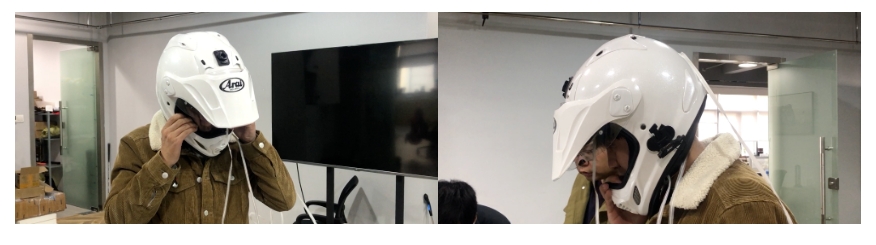
When you wear a helmet, no one loves it
At this year's 3.15 party, the party partnered with the Jiangsu Provincial Consumer Protection Commission to test the safety performance of more than 10 electric bicycle helmets and found that the proportion of inferior helmets on the market was alarming.
The helmet not only protects the user's head from injury, but also reduces the vibration and impact of the head in an accident. As a safety equipment, the protective effect of the helmet depends on whether the pressure distribution is reasonable or not, that is, there needs to be an excellent design scheme to ensure the safety of the helmet.
Pressure distribution refers to how the pressure inside the helmet is distributed and how it makes contact with the head. In the event of an impact or other strong vibration, the pressure distribution inside the helmet will directly affect the impact force on the head and directly determine whether the head will be injured. Therefore, good pressure distribution design is particularly important.
At present, many helmet manufacturers are conducting research and development on the performance of pressure distribution, and they use various technical means to improve the pressure distribution within the helmet.
First of all, the material of the helmet lining is one of the most critical factors affecting the pressure distribution. The use of a combination of materials can buffer the pressure and disperse the impact force to achieve the best pressure distribution. The adjustable lining can be adapted to different sizes of heads, which also has a positive impact on the pressure distribution.
Secondly, the structure and design of the helmet housing also have an impact on the pressure distribution. Most helmet manufacturers use multi-layer structures or materials to prevent impact. In addition, the helmet's airflow and ventilation system can also improve the pressure distribution and reduce the impact force.
How to verify the safety performance of helmets?
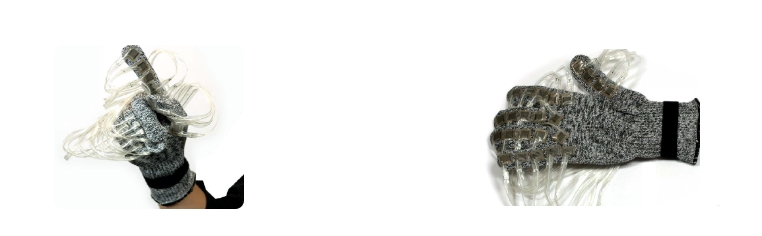
The American SPI single-point flexible pressure distribution measurement system is constructed from 24 ultra-sensitive flexible single-point pressure sensors. Users can attach the sensors to any part of the helmet according to actual needs and adjust the corresponding position in the software. The sensor is waterproof and can be measured underwater for a long time. Its electronic shielding technology can minimize the interference of the sensor by noise, temperature and humidity.
The SPI single-point flexible pressure distribution measurement system can be used to characterize the wrapping and protection of helmets, and can be applied to the performance verification of helmet surface materials, internal material properties, and helmet structure design.
In addition to the helmet pressure distribution test, the American SPI single-point flexible pressure distribution measurement system also helps to understand and optimize the labor intensity of workers, measuring the force required to cut metal with scissors, wire strippers, perform fine assembly tasks, and more. Understand the high-intensity work points during the work process, optimize the labor force, and reduce potential injuries. It is also possible to master the force required to use power tools, master the force required to use fine motor activities such as dental tools, and determine whether the tool modification reduces the corresponding workload. Quantify the force that people naturally use, determine the upper and lower limits of the force generated by the hand, quantify the human factor and the force after using the tool, and correlate the product's experience of use with controlled design changes.



 The browser own share function is also very useful~