With the continuous innovation of sports rehabilitation concepts, we also deeply understand the importance of "prevention is better than cure", and more research projects on injury prevention are being actively promoted, covering more than just professional athletes.
In addition to traditional rehabilitation physiotherapy, more life-oriented sports rehabilitation services are also extending to mass consumption. Sports injuries, musculoskeletal pain, postural posture and sports performance are the main services of the current sports rehabilitation industry. In addition, children's posture and fitness needs, physical injuries caused by special stages such as women's postpartum, and chronic pain caused by white-collar workers' continued sedentary and poor posture also require rehabilitation intervention.
If "universal health" is to be regarded as the future health and fitness trend, then sports rehabilitation will be an important branch of this trend.
01
sports biomechanics
Sports rehabilitation is usually related to the stress on the injured part, so sports biomechanics provides testing methods and research methods for exploring the causes, mechanisms and evaluating the rehabilitation effect of sports injuries, and helps professionals in the clinical field to determine the degree of injury and monitor the rehabilitation situation.
Sports biomechanics is a science that studies the laws of mechanical movement of the human body during exercise. It should specifically answer how and why the human body moves when completing various sports, and also study the relationship between external conditions that affect human movement (such as the quality of sports venues and various training and competition equipment, etc.) and sports technology, so as to study the most reasonable and effective sports technology according to the characteristics of human body shape and function, combined with the improvement of sports venues and equipment, in order to achieve the best sports performance.
Therefore, if we grasp the laws of sports biomechanics, then in actual sports rehabilitation or daily rehabilitation training, we can analyze the participation of joint muscles required for specific sports, so as to formulate more accurate rehabilitation programs or training programs.
02
Sports biomechanics related test equipment
3D motion capture system
The software analysis system that comes with Qualisys in Sweden includes a gait analysis module, which can provide users with technical services such as fast data collection, batch data processing, and simple report output.
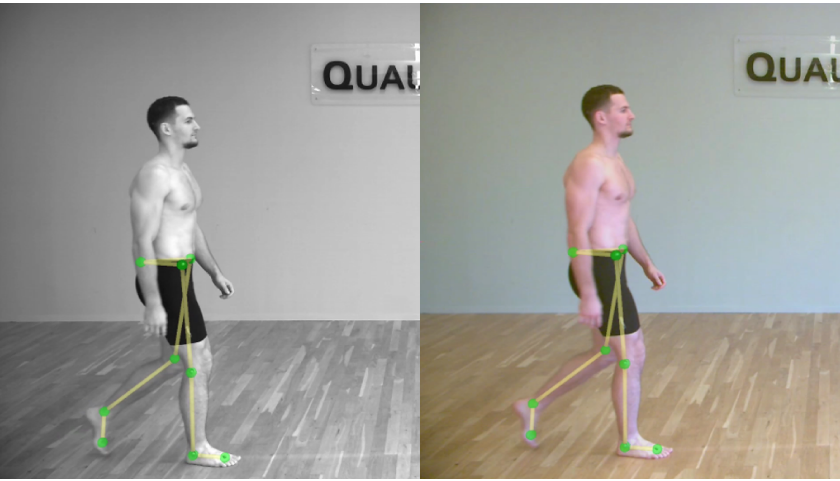
It can calculate and process data in batches quickly through the built-in data processing program, and output the kinematics, dynamics, spatiotemporal parameters of the human body, including joint angle, joint moment, ground reaction force, COP and other indicators, to improve the efficiency of measurement and analysis. It can be widely used in sports health, injury rehabilitation, development detection and other fields, and can quickly and easily provide data support for related scientific research, rehabilitation examination, and physical fitness monitoring.
surface electromyography acquisition system
Muscle (skeletal muscle) is an important part of the human movement system and the power source of human active movement. The biomechanical study of muscle is the basis for further in-depth study of changes in human movement.
Surface EMG acquisition systems (Motion lab, Myon, etc.) obtain this "signal" through signal receivers attached to the surface of the body. Based on this, we can analyze when and how strongly different muscles contract during exercise. This data can help with targeted muscle training.
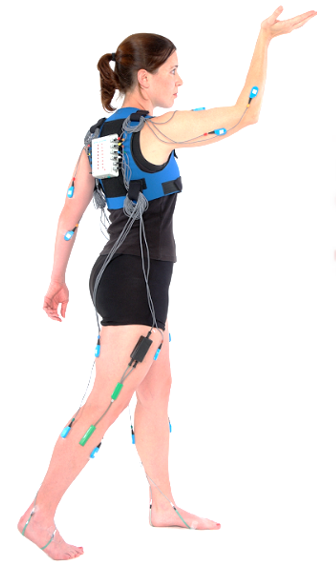
Pressure distribution test system
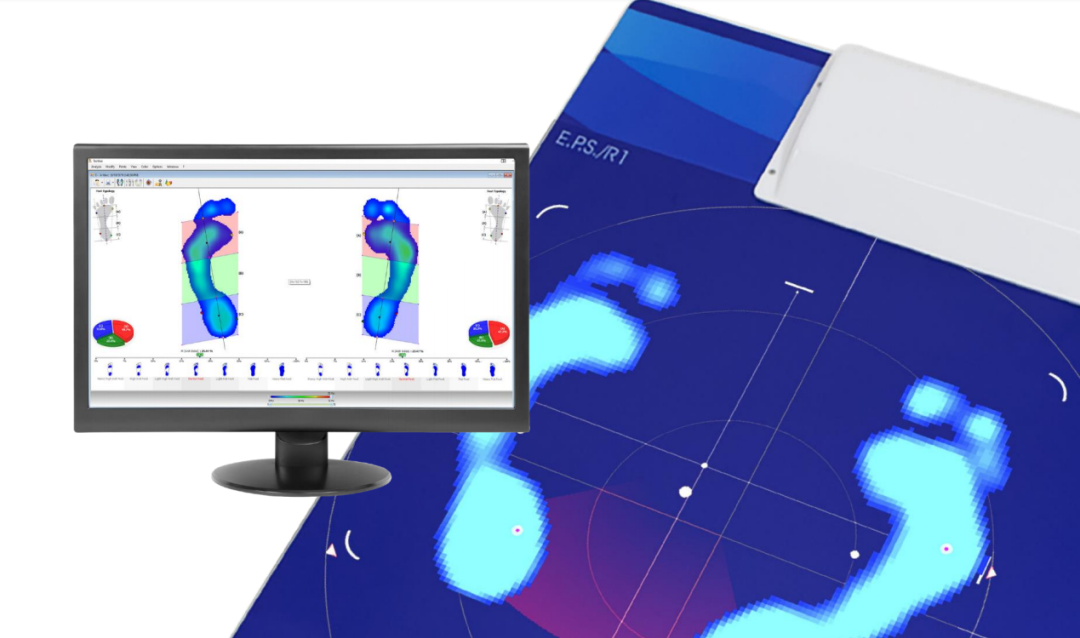
With the advance of new sensing technology and computer technology, pressure measurement has become increasingly important in biomechanics research and has now become a representative research direction of biomechanics. High-speed dynamic recording and flexible and portable high-resolution sensors provide biomechanics professionals, clinicians and researchers with accurate methods for analyzing and evaluating gait, walking and running gait, and plantar pressure data.
Due to its ultra-thin form factor and portable design, it can be tested in any flat surface, such as laboratories, offices, gyms, etc.
3D force measurement system
The measurement of dynamic parameters is also a frequent test content of sports biomechanics. Compared with the moving image analysis system, it has the characteristics of relatively simple test process and fast data collection and processing speed.
The Bertec three-dimensional force table is a commonly used testing equipment. The equipment can detect the pressure between the plantar and the supporting surface (vertical, left and right, front and rear) when standing or running. By measuring and analyzing these pressure data, biomechanical information reflecting the structure, function, and coordination of the lower limbs of the human body can be obtained.
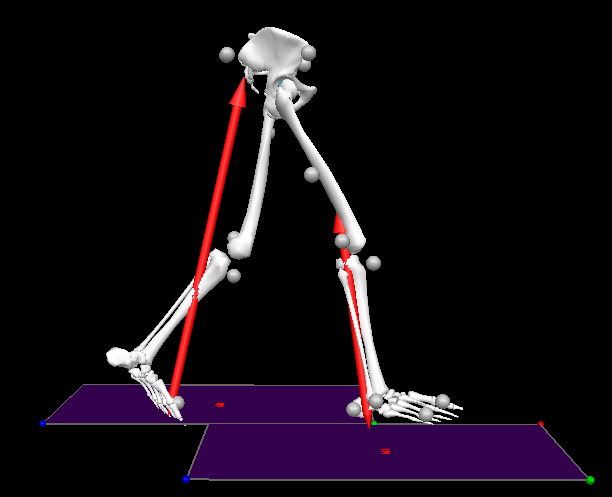
At the same time, the three-dimensional force table system can detect the pressure center curve of the normal person and the patient when they stand on the ground during running, and compare and analyze the gait of the normal person and the patient with the graphics and data detected by the force table system, so as to find out the problems existing in the patient when walking, identify the factors affecting the gait, and evaluate and make recommendations for the patient's rehabilitation plan.
In the context of the continuous improvement of modern technology in China, biomechanics research aimed at sports rehabilitation has also been fully developed. Sports biomechanics has played an irreplaceable role in the treatment of sports injuries and the promotion of athletes' rehabilitation.



 The browser own share function is also very useful~