Recently, the movie theater has finally been lively, because after 13 years, "Avatar 2" is finally released. On the first day of its official release, the box office broke 100 million, with mixed reviews.
"Isn't this just the old-fashioned family fun?"
"In the end, we just need to go home and make dumplings together."
"So old-fashioned, yet so good-looking"
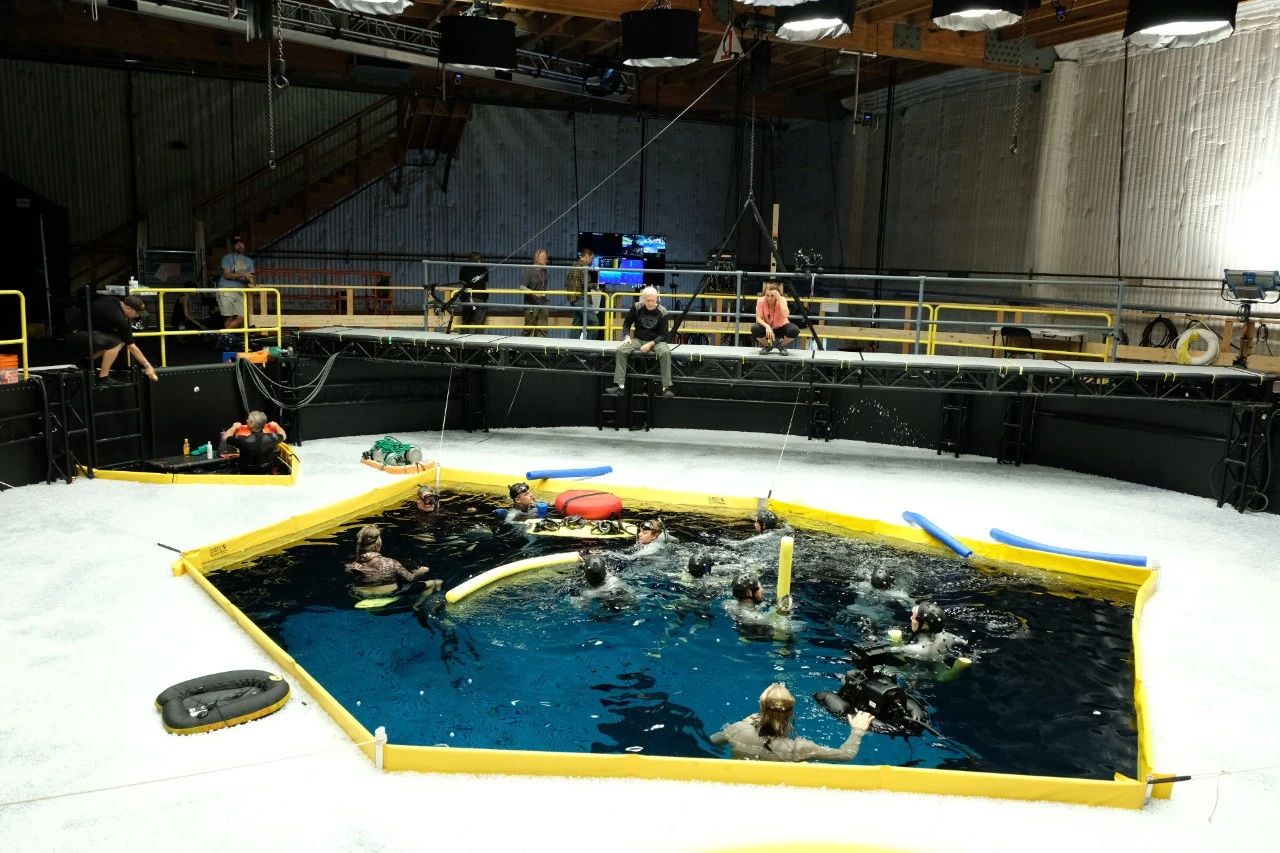
In the past, even for Hollywood "blockbusters", the underwater footage was "dry shot" first, and then the CG was used to fill the water effect. At the end of the previous "Avatar", there was a scene of Jack falling into the water, which was also shot in this way.
During the preparation period for the sequel, in order to allow CG animators to obtain more accurate motion and performance capture data in the later stage to present more realistic CG effects, Cameron proposed to "shoot real water". Cameron built a large water tank that can hold 900,000 gallons (about 3,400 cubic meters) of water in the studio to simulate the underwater ecology as realistically as possible and restore the dynamics of ocean currents.
Choose the combination of real shooting, motion capture, and CG technology to create a colorful underwater world, so that "the audience knows it's fake but is willing to believe it's real". From a visual perspective, Cameron is still the same Cameron, he did not disappoint the audience, even through the big screen, he can feel the visual impact of the movie on the audience.
Using industrial scientific and technological achievements to push film audio-visual effects to the extreme is an area that many film creators are constantly trying and exploring. Motion capture technology has been added to the film and television production workflow for more than 30 years. From the first few seconds of lens use to almost the entire work, motion capture technology is inseparable. The future of film seems to be inseparable from motion capture technology.
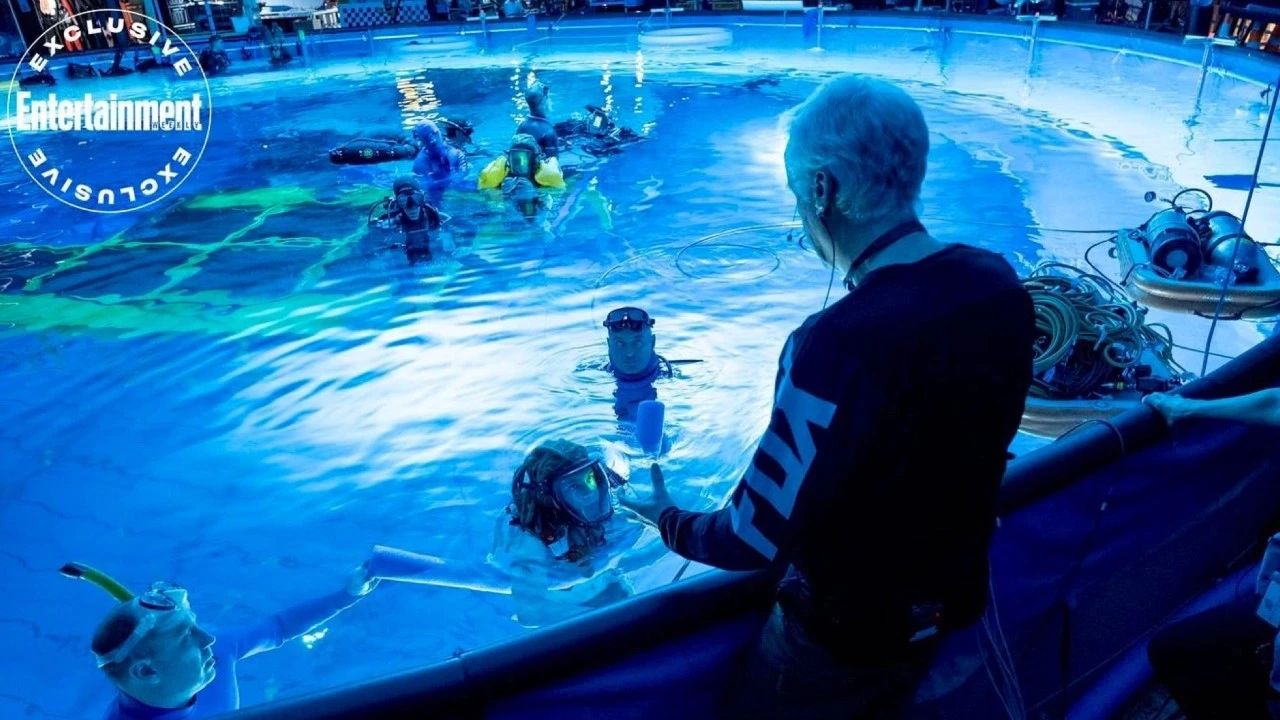
"Avatar 2" uses the actor's face capture device to cooperate with the motion capture system to capture all the information of the performer in an all-round and accurate manner, and then through the cooperative working camera, the CG image is superimposed on the real scene, finally presenting the audience's view of the hyper-real virtual characters, even a slight expression change is vividly depicted.
The demand for ingenuity in film and television animation has posed new challenges to the full-scene application coverage of motion capture technology. Qualisys' underwater motion capture system is already a mature product among the few underwater motion capture solutions available in the world.
The Qualisys 3D Motion Capture system can take underwater measurements, measure objects on the surface of the water, and combine the two (we call it a dual system) to simultaneously test and output data. The system can be used to track the movement of underwater objects such as free-running underwater vehicles, underwater objects in towing pools, cables, fishing nets, and oil pipelines.
Accurate positioning and directional tracking
The Qualisys 3D motion capture system allows for contactless tracking of objects. The camera tracks the ship's 6DOF position and orientation through lightweight marker points on the ship. Low latency data can be output in real time, and the total delay of the entire system is less than 5ms. The experimental data is extremely accurate. Small test spaces can reach sub-millimeter level. Large test spaces can achieve 1mm precision. The accuracy of rotation angle is as low as 0.1 °, but the accuracy will vary depending on the size of the capture space.
Supports both passive reflective markers and active luminous markers
Passive reflective markers are pasted onto the object to be measured, reflected by a specific light emitted by the camera, and then captured by the camera. They are often used in smaller measurement spaces smaller than 30m. Active light-emitting markers emit light through LEDs and are often used in large measurement spaces with a capture distance of up to 200m.
The underwater dual system is more suitable for research and development applications in the marine field
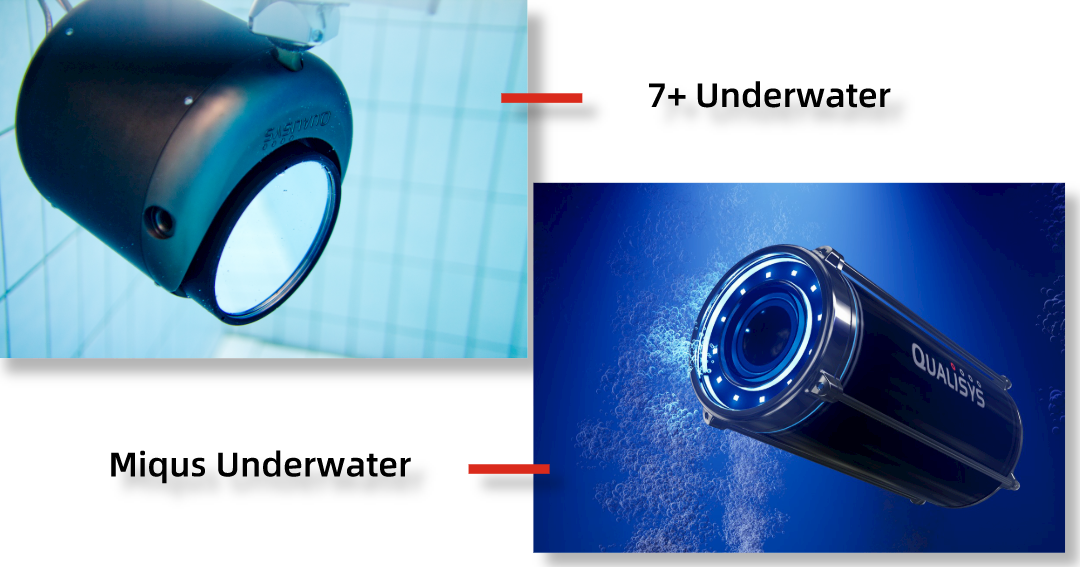
The water camera can achieve IP67 (NEMA6) waterproof and dustproof, operating temperature -15 ° C to 45 ° C, industrial grade connectors. These features allow it to be permanently installed around a sink or pool without fear of splashing, making it suitable for use in the marine sector.
The 7 + Underwater Camera is a rugged, high-resolution camera for long-distance measurements; the Miqus Underwater Camera is compact, lightweight, and has a wide range of viewing angles, making it ideal for short and medium-range motion capture in small pools and sinks.
In addition, synchronized and calibrated video cameras are added to the aquatic and underwater systems to more intuitively see ship movements by overlaying 3D and 6DOF data on the image. Video cameras can also be used independently.
Provide various plugins, SDKs, etc. to meet different R & D requirements
Plugin for real-time transfer to Matlab
Plugin for real-time transfer to Labview
Synchronizable ROS (Robot Operating System), can be downloaded directly in github.com/qualisys
Open source SDKs such as C++, C #, Python, Node.js download directly in github.com/qualisys
Supports data synchronization and different types of time reference for different acquisition systems
The camera synchronization unit (above) is used to synchronize all acquisition systems to ensure that all data is transmitted synchronously, which is convenient for subsequent research and analysis.
We also support different types of time references, such as SMPTE, IRIG, PTP, etc., to synchronize different data sources.
In January 2023, Qualisys will release a new generation of underwater motion capture camera, Arqus Underwater.
This camera follows the high quality of Qualisys industrial motion capture cameras and is more robust and stable after 40 meters of water stress testing.
We balanced the weight and volume of the camera to achieve neutral buoyancy, making it convenient for underwater operations.



 The browser own share function is also very useful~