As one of the indispensable equipment of land sports, sports shoes are highly valued by sports enthusiasts and professional athletes. They are not only simple footwear products, but also multi-functional equipment designed to meet the needs of athletes in various sports scenarios.In intense sports, the feet are often subjected to tremendous pressure and impact. Good foot protection design can reduce these pressures, reduce the risk of injury, and provide a comfortable wearing experience at the same time. Through appropriate cushioning design, sports shoes can effectively absorb and reduce ground impact, protect the joints and bones of the athlete, and reduce discomfort and fatigue during exercise. In addition, during exercise, support and balance of all parts of the body are essential, and suitable sports shoes can help maintain good posture and stability, reducing sports injuries caused by improper posture.
In the field of footwear, the application of biomechanical devices such as motion capture systems, pressure distribution sensors, and surface electromyography devices provides a new perspective and method for the design and optimization of footwear products. By in-depth study of biomechanical characteristics such as posture, pressure distribution, and muscle activity of athletes, designers can better understand the subtle changes during human movement, so as to develop more comfortable, more adaptable footwear products.
Posture and movement analysis
In the design process of footwear products, posture and motion analysis play a crucial role. Through the motion capture system, designers can accurately capture the joint angle and trajectory changes of the athlete during the movement. These data can not only be used for posture optimization, but also help designers understand the forces on different parts during the movement, thus providing an important reference for the design of footwear products.
For example, in basketball, the posture and joint angle of an athlete's foot during a jump have a direct impact on their athletic performance and injury risk. By analyzing the data obtained by the motion capture system, designers can gain a deeper understanding of the forces on the feet, knees, waist and other key parts of the athlete when jumping, as well as the changes in posture and angle of these parts. With this data as a basis, designers can precisely adjust the structure and materials of footwear products to provide better support and stability, thereby effectively reducing the risk of injury during jumping and improving the athlete's athletic performance.
Motion capture is an important tool for modern sports shoe design, which can provide designers with rich data support. By accurately collecting the posture, movement and strength output data of athletes, designers can better understand the movement patterns and habits of athletes, so as to optimize the design of shoes.
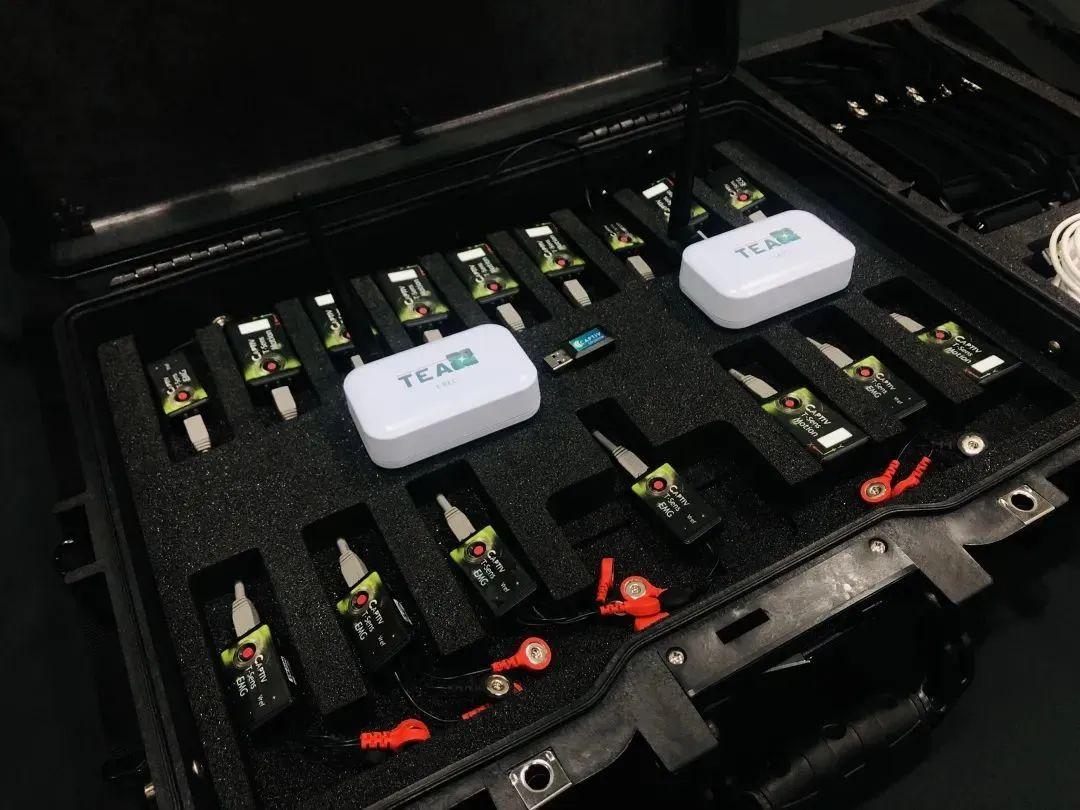
The TeaCaptiv wearable human motion capture and ergonomic analysis system is a full-body three-dimensional motion capture and ergonomic evaluation system based on wireless inertial sensing technology. It uses wearable technology and wireless data transmission technology that are most suitable for real-life scenes to realize wireless communication, allowing subjects to move and operate in a completely natural state without any interference. It includes a variety of sensors such as surface electromyography, inertial units, heart rate detection, and respiratory detection, which can detect the human body in an all-round way.
Unlike inertial motion capture, optical motion capture generally requires pasting reflective points (Marker points) at key positions of the target object, and using high-speed infrared cameras to capture the movement trajectory of reflective points on the target object, thus reflecting the movement of the target object in space.
The Qualisys 3D motion capture system is based on industrial-grade lenses with sub-millimeter precision, combined with QTM software with running posture analysis plug-in, to output a walking motion technical analysis report with one click. This report includes video and whole body biomechanical analysis data: body tilt/rotation angle, elbow and wrist movement trajectories, pelvic height, hip angle, knee angle, foot touch method, etc.
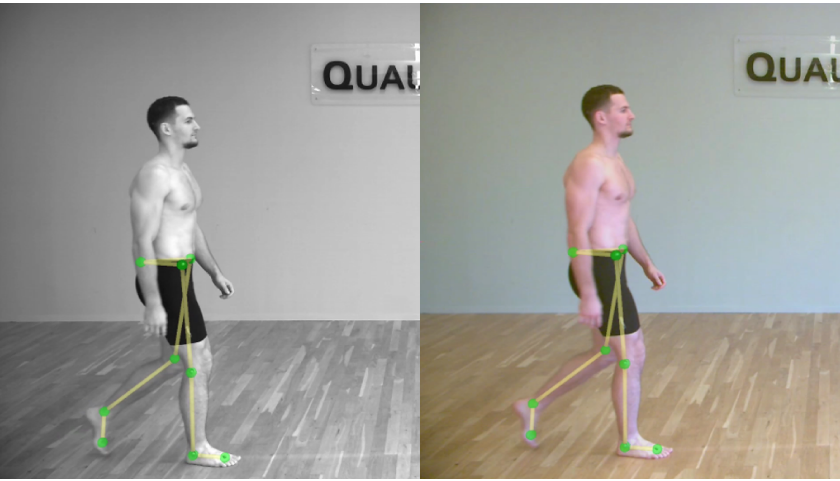
Motion capture can not only help designers optimize the structure and materials of shoes, but also be used to verify the design effect. By comparing with actual motion data, designers can evaluate whether the design of shoes is achieving the desired effect and make necessary adjustments and improvements.
The application of posture and motion analysis in the design of footwear products can not only improve the functionality and performance of the product, but also provide a more comfortable and safer exercise experience for the athlete. By using advanced technical means, designers can more accurately understand the subtle changes during exercise, thus creating more ergonomic and biomechanical footwear products.
Pressure distribution analysis
The pressure distribution sensor is another key biomechanical device used to monitor the pressure distribution at the force points on the soles of the feet. Through high-speed dynamic recording and flexible and portable high-resolution sensors, biomechanics professionals, clinicians, and researchers are provided with a way to accurately analyze and evaluate gait, walking, and running gait, and plantar pressure data.
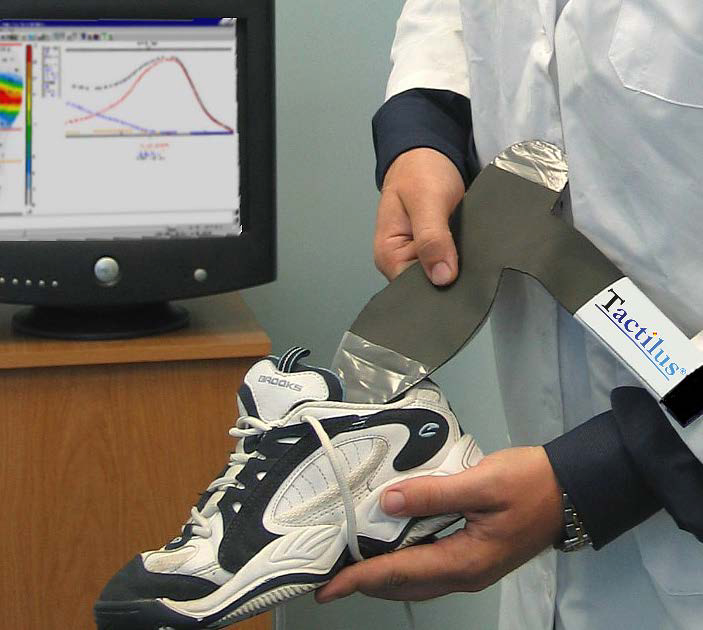
These advanced sensor technologies are able to capture and record in real time the plantar pressure distribution during movement, as well as the gait characteristics associated with it. These sensors not only have high resolution and high sensitivity, but also have the characteristics of portable and real-time monitoring, allowing researchers to perform dynamic gait analysis in and out of the laboratory, thus closer to the real exercise environment. Advances in this technology have brought great convenience to biomechanical research and clinical practice, contributing to in-depth understanding of the biomechanical characteristics of gait. Its ultra-thin shape and portable design can be tested in any flat surface such as laboratories, offices, gyms, etc., which can reduce the risk of falls and gait interference. It can be used to analyze static and dynamic plantar conditions and body balance ability, and is widely used in sports biomechanics research, sports shoe design, gait analysis, balance analysis, diabetic foot testing, lower limb bone and joint diseases and other clinical and scientific research fields.
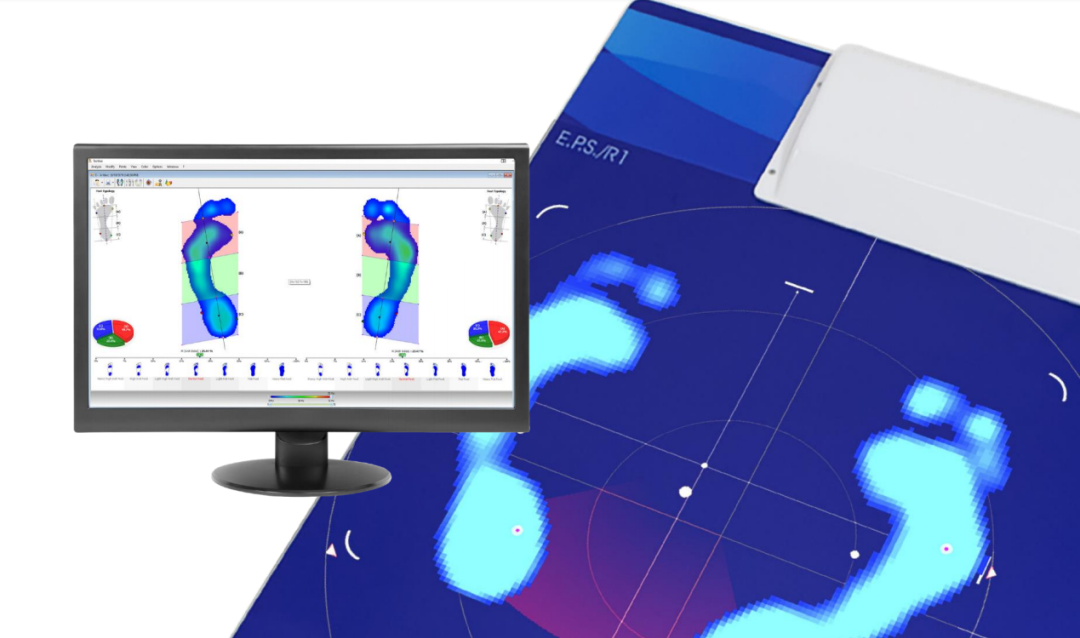
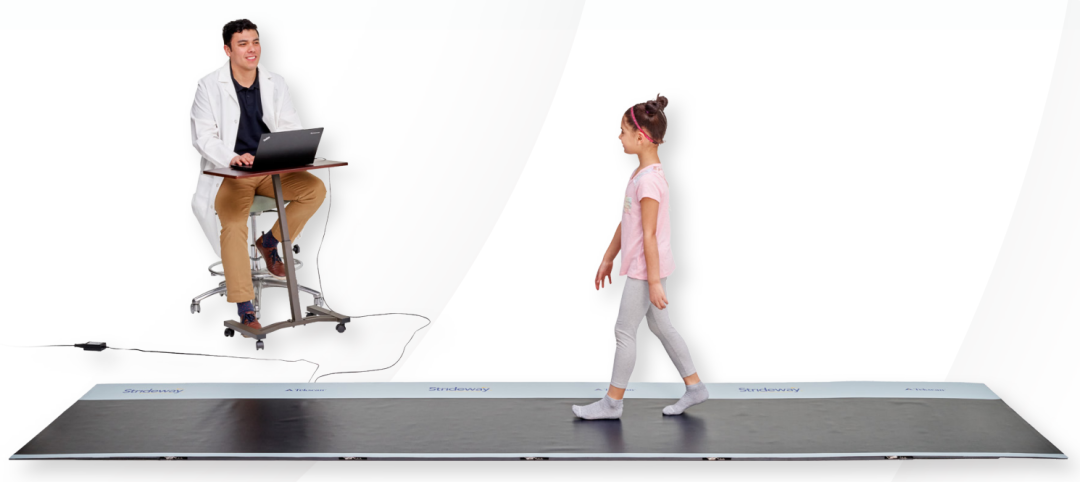
Therefore, the application of plantar pressure measurement technology in the field of biomechanics not only provides a powerful tool for scientific research, but also provides important support for clinical practice and movement improvement, promoting the development and progress of related fields. When standing or walking for a long time, the pressure on the soles of the feet may be too high, resulting in discomfort or fatigue. By combining pressure distribution data and material engineering knowledge, designers can precisely select the appropriate materials and structures to balance the pressure on the feet and improve wearing comfort. Designers can understand the pressure distribution in different parts, including parts such as the heel, sole, and toe, as well as changes in different sports states.
These data provide designers with a valuable reference, enabling them to precisely adjust the structure and materials of the sole to meet different sports needs and individual differences, helping them optimize the sole design, improve wearing comfort, and minimize foot pressure, thus providing athletes with a better wearing experience and sports performance.
Muscle activity analysis
Muscle contraction is the driving force behind movement, which means that different muscle groups need to coordinate their work at different times to complete any movement. This complex process involves the brain's nervous system sending signals to muscles to cause them to contract. And the form of this signal is bioelectricity. Bioelectricity refers to electrical signals generated by electrochemical processes within an organism. In the human body, the brain's nervous system sends electrical signals to muscles through nerve cells to regulate muscle contraction and relaxation. These electrical signals carry instructions to tell muscles when to contract and when to relax, thereby controlling the body's movement.
When a person decides to walk, the brain sends signals to the leg muscles, causing them to contract to produce the movements required for walking. These signals are transmitted in the nervous system, eventually reaching the muscles, triggering the contraction response of the muscles to achieve the walking action. By studying and understanding these bioelectrical signals, designers can gain a deeper understanding of the movement control mechanisms of the human body. The most representative in this field are surface electromyography devices.
Surface electromyography devices can help designers gain a deeper understanding of muscle activity during exercise. By monitoring muscle electrical activity signals, designers can accurately evaluate muscle usage and fatigue, thus providing more accurate optimization solutions for the cushioning and support performance of footwear products.
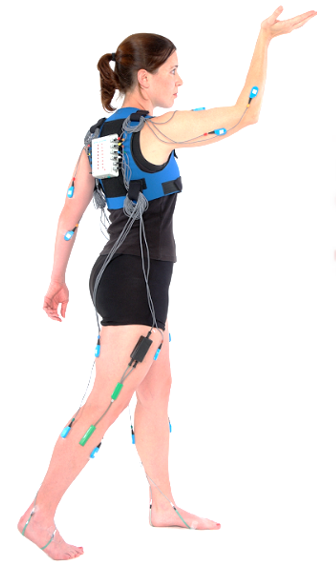
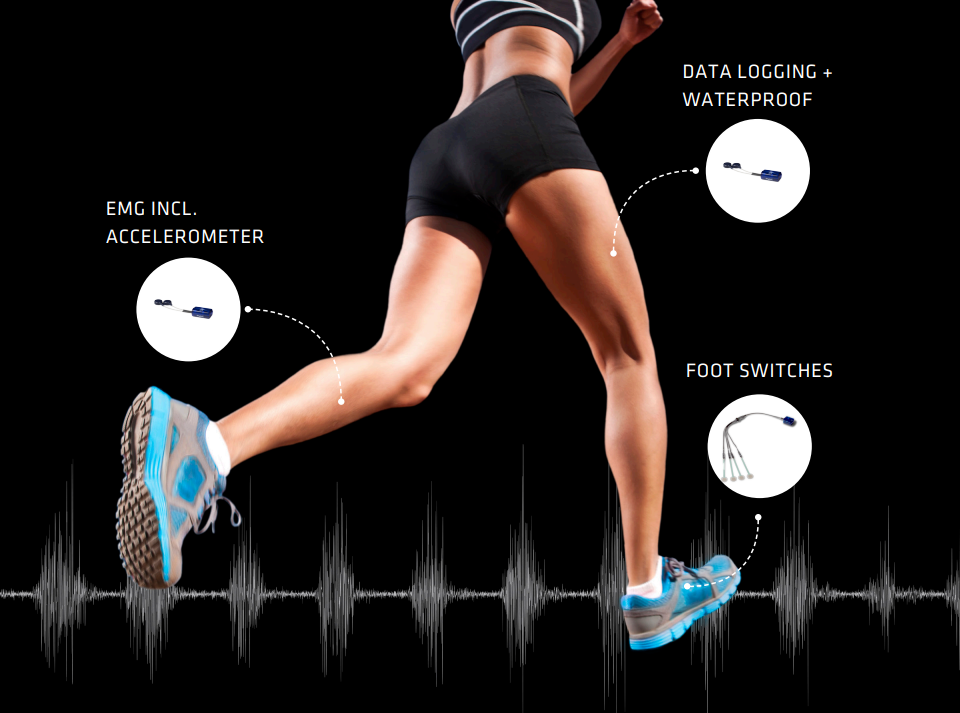
During running, the degree of activity of the thigh muscles directly affects the stability and stress of the knee. By analyzing the EMG signal data, designers can understand the degree of activity of different muscle groups during running, and then adjust the structure and material of the sole to provide better support and cushioning effect. According to the EMG data, designers can adjust the elasticity and hardness of the sole, optimize the design of the insole, thereby reducing the fatigue of athletes during running and reducing the risk of injury.
Surface EMG acquisition systems (Motion lab, Myon, etc.) obtain this "signal" through signal receivers attached to the surface of the body. Based on this, we can analyze when and how strongly different muscles contract during walking.
Sole pattern analysis
Taking the sole contact area test of sports shoes as an example, the accuracy of PressureFilms pressure sensing paper can reach the pixel level of the picture, restore the real contact area of the sole pattern of sports shoes, and the pressure difference of the pattern details. It can be applied to the design and development of the sole pattern of basketball shoes, tennis shoes, running shoes, etc., to improve the anti-slip and grip performance of sports shoe products.
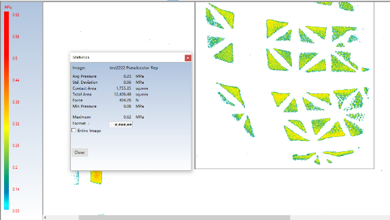
Later, you can customize the area and output the average pressure, maximum pressure, minimum pressure, pressure value, contact area and other relevant statistical results of each area!
The choice of shoe materials
MatchID-2D3D full-field strain measurement system can realize full-field 3D displacement, deformation and strain measurement of the surface of vibrating objects. Its application fields include material mechanics, fatigue and fracture mechanics, structural mechanics, impact mechanics, vibration mechanics, micro-nano mechanics, biomechanics, etc.
Designers and manufacturers can learn about the performance of shoe materials in different aspects, so as to optimize and improve the design. For example, in terms of support performance, sole hardness, upper material and structure can be adjusted to provide better support effect; in terms of cushioning performance, more suitable sole materials and structures can be selected to reduce the impact of ground impact on the foot; in terms of stability performance, sole design and materials can be optimized to provide better stability.
The application of biomechanical equipment in the field of footwear provides strong support for the design and optimization of footwear products. By in-depth study of biomechanical characteristics such as posture, pressure distribution, and muscle activity of athletes, designers can develop more ergonomic footwear products that improve their comfort, stability, and performance, providing athletes with a better wearing experience.

The 10th Footwear Industry Forum
2024 The 10th Shoe Material Industry Forum will be held on March 29, 2024 (reported on 28) at Howard Johnson Hotel Xiamen Jimei Lake (No. 121, Ligong Road, Jimei District, Xiamen).
Shanghai Fengyou Information Technology Co., Ltd. sincerely invites you to visit the booth for guidance! Some of the above biomechanical products will be displayed at that time, so stay tuned!



 The browser own share function is also very useful~