

Potential technology in multiple application fields: 5 minutes speed reading, take you to understand the action capture
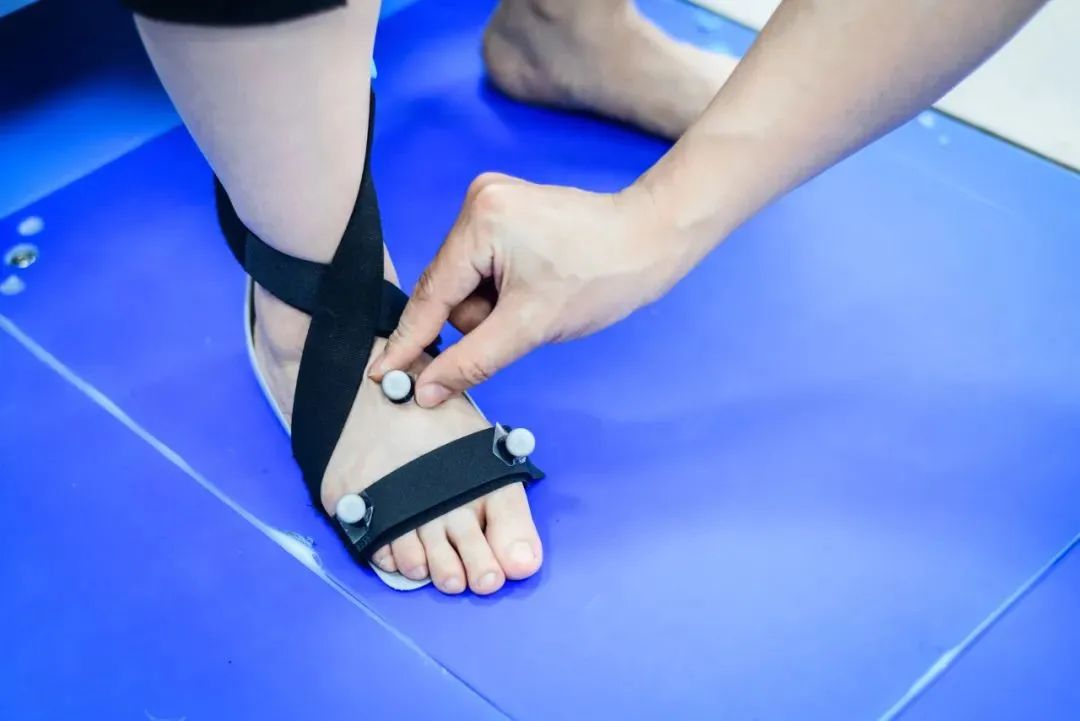
Motion capture (Motion Capture) technology may be unfamiliar to many people, but in real life, you may have been exposed to this technology without realizing it. For example, some characters in the movies "Rise of the Planet of the Apes", "Alita: Battle Angel" and "Avatar" are post productin through motion capture technology. Some people may ask why motion capture technology is needed because 3D animation technology is so advanced. If you understand the production process of 3D animation, you will know that a series of operations such as painting, modeling, and rendering are very time-consuming and labor-intensive. Sometimes it is difficult to design the movements of characters, and it is not easy to achieve the desired effect. The advantage of motion capture technology is that it can directly capture live performances, which not only saves a lot of production costs and time, but also makes the characters' movements more natural and realistic. Motion capture is a technology that records and converts the movements of objects, especially human bodies, into digital data. Initially, this technology was mainly used for animation production and game development, but today it is widely used in many fields, including sports science, medical rehabilitation, virtual reality (VR), augmented reality (AR), military training, and robotics, among others. Motion capture technology uses this data for analysis and application by installing marker points or sensors on the body of the captured object and capturing the three-dimensional position data of these marker points or sensors using a camera or sensor array.

What are the types of motion capture? According to different technical principles, there are many kinds of motion capture, such as mechanical, acoustic, electromagnetic, active optical and passive optical, inertial motion capture... Different types of motion capture technologies have their own advantages and disadvantages. In the field of motion capture, optical motion capture is one of the most common and mature technologies. Optical motion capture systems utilize infrared cameras to capture the movement of passively reflected markers, or use active luminous LEDs to mark points. The main advantage of optical motion capture is its high precision and high resolution, which can capture very fine motion details, so it has been widely used in film and game animation production. For example, many Hollywood movies rely on optical motion capture technology for action scenes and character performances. However, optical motion capture needs to be carried out in a special environment, the camera needs to be aimed at the marking point, and the marking point cannot be blocked, otherwise it will affect the accuracy of data capture. In addition, this technology requires high equipment and is more expensive.
Optical motion capture systems typically contain multiple cameras to ensure that the movement trajectory of the marker point is captured from different angles. The camera uses triangulation to calculate the position of the marker point in three-dimensional space by synchronizing the captured image data. Passive reflective markers are usually small spherical reflective materials. When infrared light strikes the marker point, the light will be reflected back to the camera; active luminous markers are small LEDs that directly emit visible or infrared light for the camera to capture. A representative of the optical motion capture system is Qualisys 3D motion capture system. Qualisys originated in Sweden and was established in 1989. It is a leading supplier of optical motion capture products and services worldwide. Qualisys motion capture systems are used all over the world every day, mainly in the field of human biomechanics, sports field, industrial field, entertainment field, animal biomechanics field, etc. Qualisys has a complete motion capture solution, applied in the field of scientific research, which can obtain acquisition data, analyze data, generate reports. Applied in the field of human biomechanics in clinical gait, sound and motion, psychology, MRI, etc. Qualisys is the first choice for sports science, especially sports biomechanics, which has the fastest motion capture lenses in the world. These lenses have low latency output and sub-millimeter accuracy, with a capture range of up to 35 meters. As the gold standard for position tracking in the industrial field, Qualisys is used in projects such as drone, robotics, marine and underwater research. Qualisys motion capture systems help game studios, film and television producers create great animations, and VR developers create immersive experiences. There are similarities between animal and human research application fields when it comes to problem solving. For example, whether it's animal or human research, it's about finding potential injury problems or the best sport mode to win a game.
Inertial motion capture is another widely used motion capture technology. It uses inertial sensors such as accelerometers, gyroscopes, and magnetometers to capture motion data. Unlike optical motion capture, inertial motion capture does not rely on external cameras and optical markers, so it is not affected by ambient light and occlusion. It can be used anywhere and is ideal for long-term recording. This technology is widely used in motion analysis, motion rehabilitation, and wearable devices. For example, many fitness trackers and smartwatches use inertial sensors to monitor the user's state of motion. The French TeaCaptiv wearable human motion capture and ergonomic analysis system is a full-body three-dimensional motion capture and ergonomic evaluation system based on wireless inertial sensing technology. It uses wearable technology and wireless data transmission technology that are most suitable for the real scene to achieve wireless communication, allowing subjects to move and operate in a state of complete natural freedom without any interference. The Captiv Motion wearable motion capture system and inertial sensor measurement motion module can replace the goniometer and torque meter, and can calculate the orientation and rotation angle of limbs and joints in 3D space. Captiv Motion uses wearable technology and wireless data transmission technology that are most suitable for the real scene to achieve wireless communication without the need to connect sensors and data recorders with cables. When collecting data, the human body can move and operate in a state that is completely free from any interference, so that subjects do not have to feel constraints and discomfort from cables, so as to achieve the purpose of studying individual behavior, physiological and emotional conditions, vision, cognition, activity and other body characteristics in a specific working or moving state and the interaction between the surrounding environment stimuli. The Captiv Motion system wireless sensor and data recorder module combines azimuth sensors, gyroscopes, and acceleration sensors to capture human movements in real time, providing information such as joint angle, speed, position, and torque (collected data include: bending/extension, abduction/adduction, torsion, angular velocity, and angular acceleration, etc.). It can be used for simulation experiments based on the laboratory, or it can be completely removed from the fixed field for real-world field research.

 The browser own share function is also very useful~
cancel
Clear records
history record
Clear records
history record
A planned and systematic training and training activities carried out by enterprises to improve personnel quality, ability, work performance and contribution to the organization.



品牌认证
2970天
已认证
