A treadmill is a device widely used in fitness, rehabilitation, and sports training. For runners and athletes, treadmill training is an effective way to improve cardiorespiratory fitness, increase endurance, control weight, and improve athletic performance. However, its effectiveness and impact on the human body largely depend on many factors, such as speed.
The different treadmill speeds can lead to different physiological and kinematic responses, especially for the lower limbs of the human body.
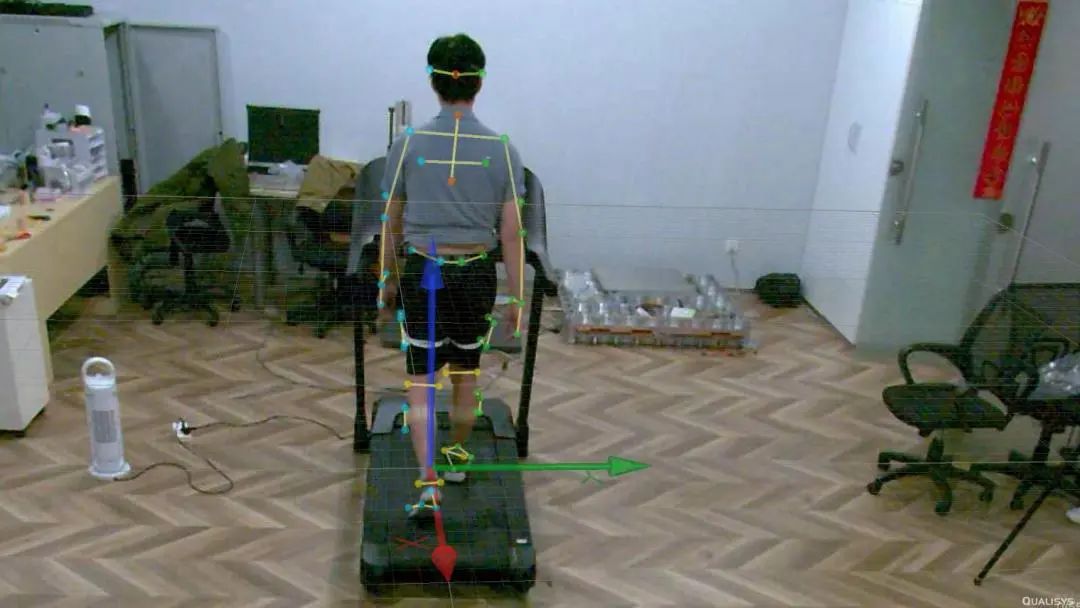
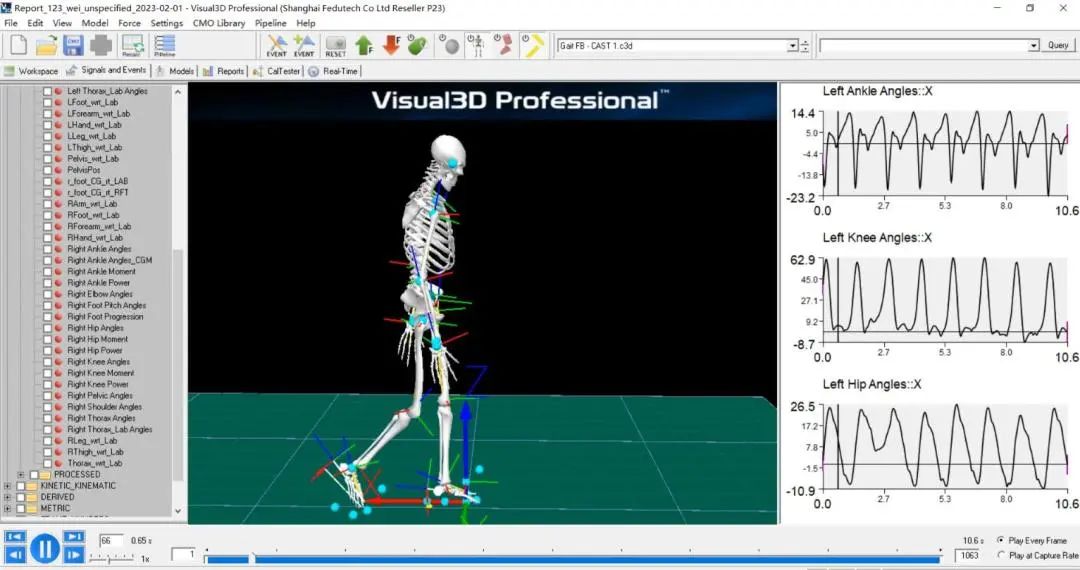
We used Qualisys motion capture system to synchronously collect the kinematic parameters of the knee, ankle and hip joints when the subjects were running at treadmill speeds of 5km/h, 7km/h, 9km/h and 11km/h, and used Visual 3D to calculate the joint angle and other data. Finally, SPSS software was used to perform one-way variance analysis on the data results to analyze the effects of different running speeds on the kinematic characteristics of the subjects' lower limb joints, providing a scientific basis for personalized treadmill training and rehabilitation programs.
"Running knee" is a chronic overwork injury, and both ordinary people and athletes may encounter knee injuries in sports.
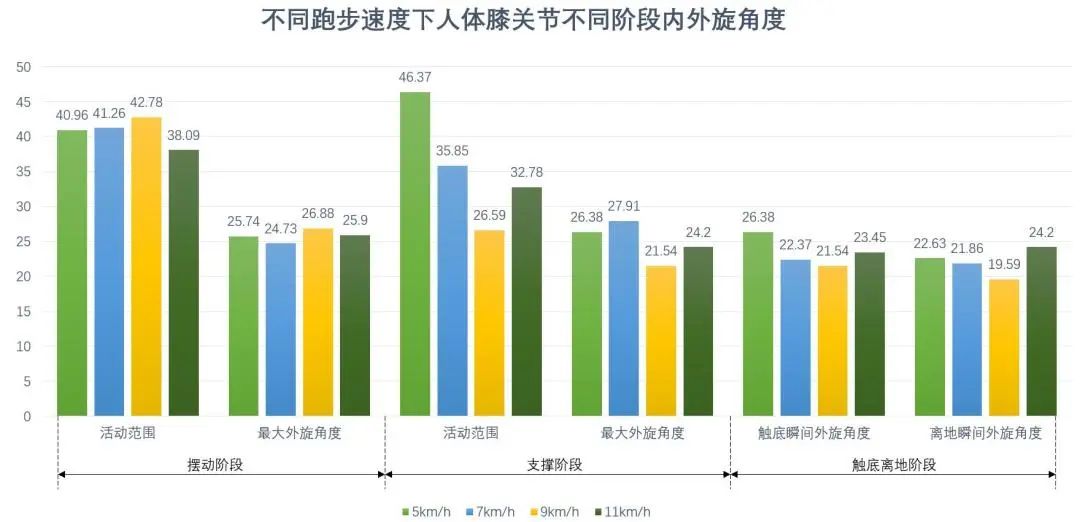
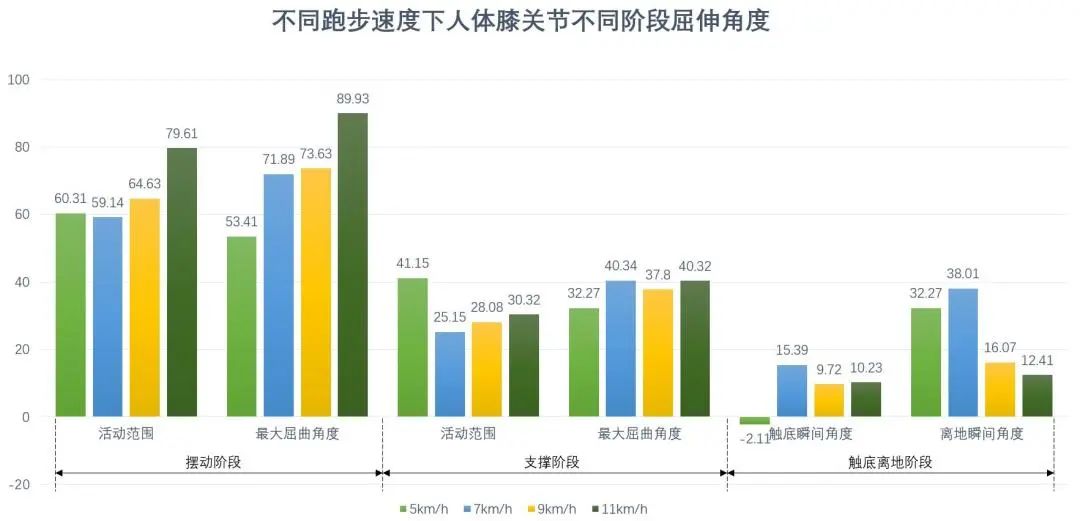
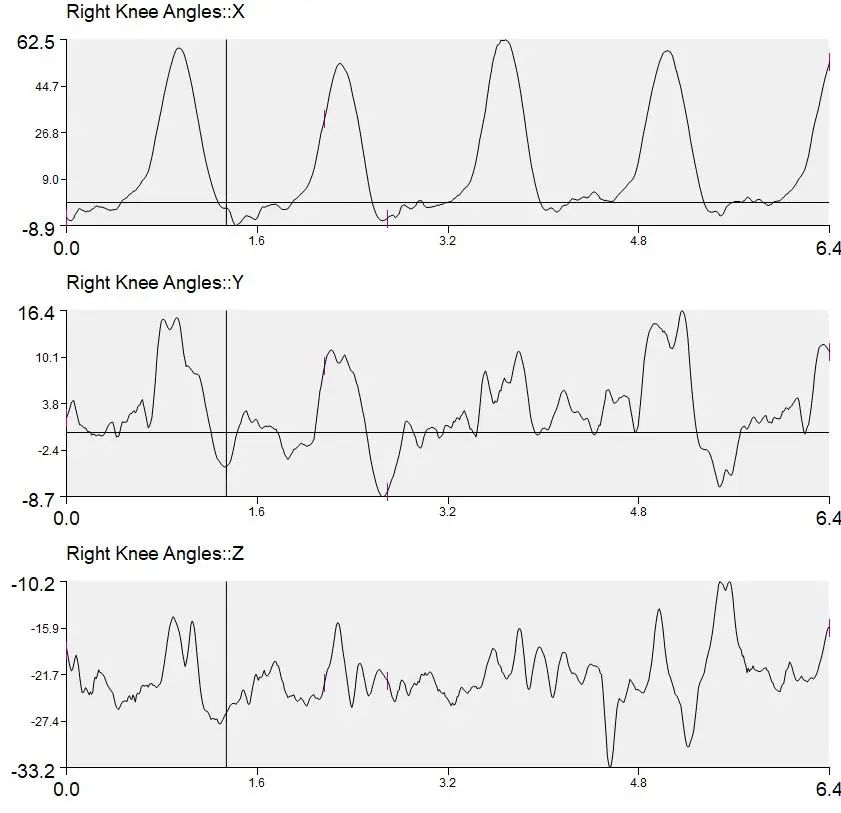
We took the knee joint as an example. When the treadmill speed was 5km/h, 7km/h, 9km/h, and 11km/h, the subjects did not experience excessive flexion, overstretch, and excessive internal or external rotation of the knee joint during running. Therefore, the above four speeds are safe for knee joint activities.
01 Support stage
When the treadmill speed was 5km/h, 7km/h, and 9km/h, there was a significant difference in the average difference of knee flexion and extension angle and internal and external rotation angle of the subjects (P < 0.01), indicating that the change of speed would cause the knee flexion and extension angle and the average difference of internal and external rotation angle. There was no significant difference in the average difference of knee flexion and extension angle and internal and external rotation angle at 11km/h and 7km/h and 9km/h (P > 0.05), indicating that when a certain speed was reached, the increase of speed had little effect on the knee flexion and extension angle and internal and external rotation angle (see Figure 1, Figure 2).
Flexion and extension range of motion: When the treadmill speed is increased from 5km/h to 7km/h, 9km/h, and 11km/h, in order to maintain stability, the knee joint will be relatively fixed, reducing the range of motion and reducing the risk of falls or injuries.
Maximum external rotation angle & external rotation range: When the treadmill speed increases, the maximum external rotation angle and external rotation range of the knee joint are relatively reduced. In high-speed running, the body needs higher stability to cope with ground reaction forces and maintain body balance. Reducing the external rotation range of the knee joint can increase the stability of the joint and help reduce shaking and instability, thereby reducing the risk of falls.
02 Swing stage
There was no significant difference (P > 0.05) between the knee flexion and extension angle and internal and external rotation angle at different speeds, indicating that the set speed had little effect on the knee flexion and extension and internal and external rotation in the swing stage.
03 Moment off the ground
Buckling Angle: The knee flexion angle at the moment of 9km/h and 11km/h off the ground is significantly less than 5km/h and 7km/h. In high-speed running, first of all, high-speed running requires faster leg movements. Reducing the flexion angle of the knee joint can reduce the amplitude of the leg swing, reduce the time for the leg to swing in the air, improve the cadence, and increase the running speed.
When increasing the speed, the lower limb joints will make angle changes to provide the stride length, speed and stability required for exercise to adapt to different exercise intensities. But when the speed is too large, it will increase the burden on muscles, bones and joints, which can easily lead to sports injuries, such as muscle strains, knee joint problems, etc. Therefore, a reasonable running speed can effectively reduce the risk of exercise. To choose an appropriate speed, make a training plan according to the individual's physical fitness level, goals and health status.
For experimental details, please contact Shanghai Fengyou Biomechanics R & D Center: fed_lab03@fedutech.com
Application direction
Clinical medical research: preoperative and postoperative rehabilitation, clinical rehabilitation assessment and treatment, disability assessment, orthopedics and gait analysis;
Neuroscience research: eye tracking, robot behavior assessment, animal behavior research.
Sports: sports equipment manufacturing, assisting athlete training and athlete injury prevention;
Biomechanical calculation: three-dimensional kinematics, three-dimensional dynamics and EMG;
Other application fields: virtual reality, ergonomics, industrial process optimization and many other fields.


 The browser own share function is also very useful~