If you want a good night's sleep, a comfortable pillow is essential. For developing children, pillows are even more important. Not choosing the right pillow will not only make you uncomfortable sleeping, but also affect the health of your baby's cervical spine.
Babies under 3 months have not yet experienced neck curvature. At this time, whether lying flat or on the side, the head and body are at the same level, and there is no need for a pillow, which will be uncomfortable.
In order to avoid the risk of choking, it is not recommended to use pillows for babies under the age of 1.
Babies cannot use adult pillows, nor can they sleep with one pillow unchanged from infancy to adulthood.
To choose the right pillow, the simplest criterion is that the child's head and body are on the same level. But to rely on more accurate and scientific data to assist in the selection of baby pillows, professional testing equipment is required.
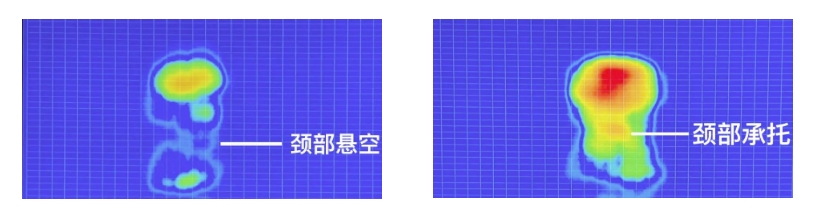
The sensors of the SPI Tactilus pressure distribution test system are composed of an array of resistive weaving sensing units. The weaving material is soft and has 120% or 158% ductility. When the head and neck fall on a softer pillow or mattress, the sensor will not warp and cause noise. It can be fully fitted to pillows, mattresses, and seats, in line with ergonomic principles.
This system uses complex mathematical algorithms to intelligently separate signals from noise, and its advanced electronic shielding technology can minimize the interference of sensors by noise, temperature, and humidity.
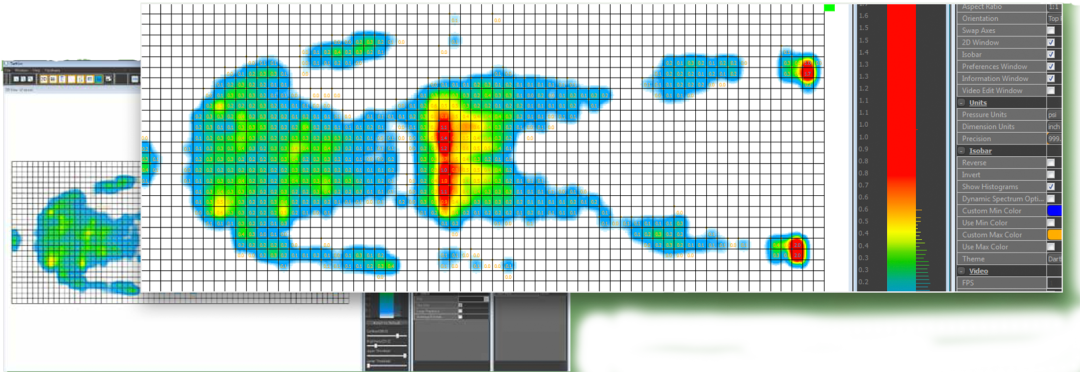
The pressure distribution measurement system is a visualization tool for the pressure between the human body and the contact surface. It can be widely used in pressure distribution measurement and analysis in various fields. This system can perform static and dynamic measurement of pressure distribution on any contact surface, display the contour of pressure distribution and various data in real time with intuitive and vivid 2D and 3D color images, and record and store the entire measurement process. Users can view and analyze the measurement records at any time.
It replaces subjective test evaluation with objective test, which can effectively reduce the deviation. It can quickly and accurately reflect the pressure distribution of the subject and the contact surface, and a measurement can be completed in a few minutes, which not only ensures the accuracy of the test, but also saves time, and reduces the impact of individual and environmental restrictions on the test results.
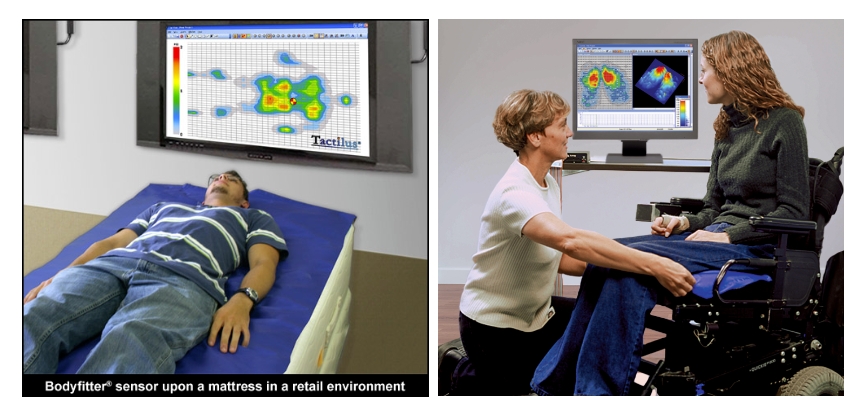
In the test process, if the objective test can reduce the subject's mood swing, feeling fluctuations, state fluctuations and environmental fluctuations on the judgment results of the impact of the measurement method stability, high accuracy, reliable test.
Pressure testing methods are widely used in various fields, including medical, clinical, rehabilitation, sports, industry, furniture design, automotive and other fields. With the development of sensing technology, telemetry and remote control technology, electronic technology and computer technology, stress testing systems will develop towards high performance, low price, remote, and higher degree of automation.



 The browser own share function is also very useful~