In recent years, the use of outdoor clothing has undergone tremendous changes, which is caused by the "fashion" trend of functional clothing and the continuous expansion of the audience. Outdoor brands such as The North Face and ARC'TERYX have continuously launched fashion feeder and joint series, which have made outdoor equipment not only limited to trail running, camping, mountaineering, etc., but also began to appear frequently in urban life scenes.
Behind this trend is the demand for functional clothing, with people paying more attention to wearing comfortable, stylish-looking clothing. This lifestyle-oriented demand has promoted the popularity of outdoor equipment in urban life.
The fusion of different styles has blurred the scope of use of professional equipment, and running shoes are no longer limited to the exclusive choice of running enthusiasts. Their stage has begun to shift from the outdoor field to the trendy fashion stage. This trend has promoted the continuous expansion of the intersection of outdoor groups and trendy players, and the choice of equipment has gradually begun to converge.
As trail runners begin to spend more time with sports styling, how to design outdoor sports equipment that takes into account both performance and design has naturally become an inevitable problem for running shoe designers.
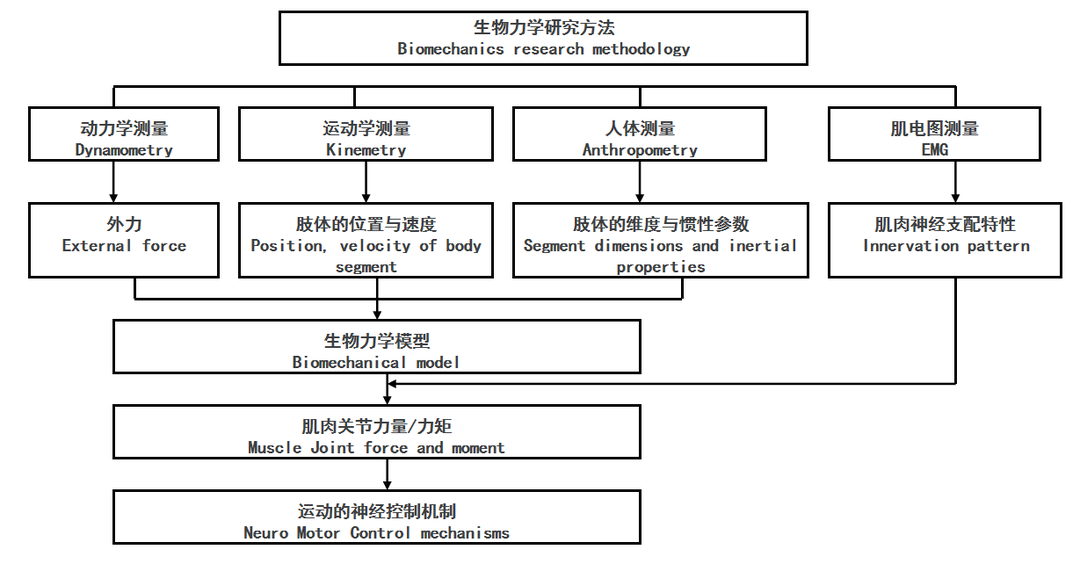
Biomechanics is a complex and precise field. It applies mechanical principles and methods to the branch of biophysics that quantitatively studies mechanical problems in organisms. The research objects include a wide range, from the whole of the organism to systems and organs (including blood, body fluids, organs, bones, etc.), from bird flying, fish swimming, flagella and cilia movement to the transport of plant body fluids, etc., which greatly promotes the combination of mechanics and histology, physiology, and medicine. It mainly involves the mechanical behavior of human bones, joints, muscles and other tissues during exercise. When studying the performance of sports shoes, biomechanics evaluates the performance of sports shoes by analyzing the kinematic and kinetic parameters of the human body during different sports.
By analyzing these biomechanical parameters, we can gain a deeper understanding of the characteristics of human movement and provide a basis for evaluating the performance of sports shoes. When evaluating the performance of sports shoes, the following aspects are usually considered:
Support performance: The support performance of sports shoes directly affects the stability and comfort of athletes. In the design project, it is necessary to evaluate the support of sports shoes on the foot during different sports, as well as the hardness of the sole and the material of the upper.
Slow shock performance: During exercise, the foot will be subjected to the impact force from the ground, and a good cushioning design can reduce the damage to the foot and body caused by this impact.
Stability: In some sports that require quick steering or frequent direction changes, good stability can help athletes maintain balance and control their movements.
Air permeability and comfort: In addition to the above aspects, the air permeability and comfort of sports shoes are also important evaluation indicators. It is necessary to evaluate the air permeability and comfort of sports shoes under different exercise intensities, as well as the impact of upper materials and internal structures on comfort.

From a structural perspective, sports shoes are composed of upper, insole, midsole, and outsole, each of which has its own characteristics. To gain a comprehensive understanding of the suitability of people and shoes, corresponding biomechanical sensor equipment is required to assist.
3D motion capture system
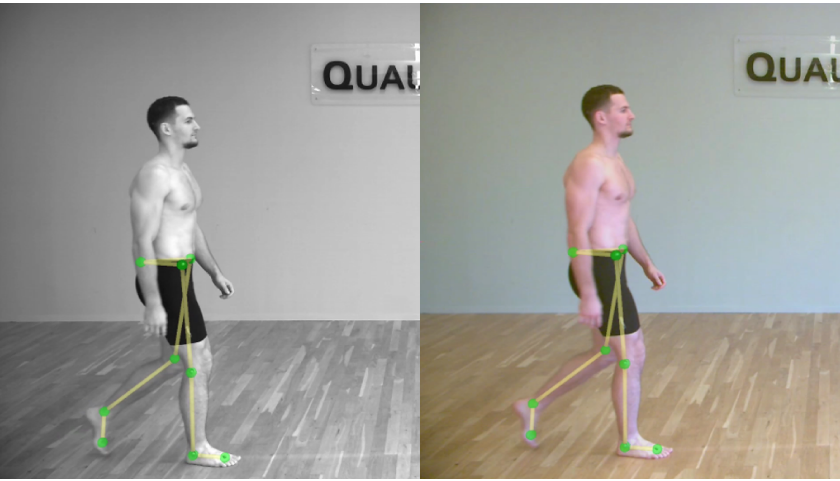
Motion capture is an important tool for modern sports shoe design, which can provide designers with rich data support. By accurately collecting the posture, movement and strength output data of athletes, designers can better understand the movement patterns and habits of athletes, so as to optimize the design of shoes.
Optical motion capture generally requires pasting reflective points (Marker points) at key positions of the target object, and using high-speed infrared cameras to capture the movement trajectory of the reflective points on the target object, so as to reflect the movement of the target object in space.
The Qualisys 3D motion capture system is based on industrial-grade lenses with sub-millimeter precision, combined with QTM software with running posture analysis plug-in, to output a walking motion technical analysis report with one click. This report includes video and whole body biomechanical analysis data: body tilt/rotation angle, elbow and wrist movement trajectories, pelvic height, hip angle, knee angle, foot touch method, etc.
Motion capture can not only help designers optimize the structure and materials of shoes, but also be used to verify the design effect. By comparing with actual motion data, designers can evaluate whether the design of shoes is achieving the desired effect and make necessary adjustments and improvements.
Motion capture devices can also provide a platform for scientific research and innovation. By analyzing the movement patterns and power output of athletes, new design concepts and technologies can be discovered, driving continuous innovation in sports shoe design.
surface electromyography measurement system
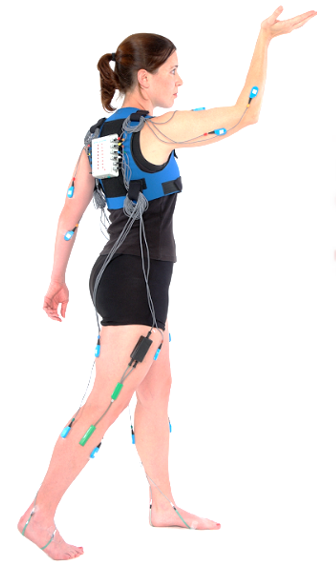
Surface electromyography refers to the amplification, recording, and display of a one-dimensional time-series signal pattern of voltage changes generated by the activity of single or multiple muscle cells or parts of muscle tissue, guided by electrodes. It can be measured by a dedicated electromyography instrument or a multi-conductance physiology instrument. Whenever a muscle contracts, electrical activity is generated, which is conducted through adjacent tissues and bones and then recorded by electrode pads on adjacent skin areas.
The surface electromyography measurement system can be used to evaluate the support and stability of sports shoes to muscle groups during exercise. By monitoring the muscle activity of athletes, it is possible to understand whether the design of shoes can effectively reduce muscle load and provide adequate support and stability. Based on this data, designers can optimize the structure and materials of shoes to improve their support and stability.
By monitoring the activity of key muscle groups, information such as the stride length and the way the athlete lands during the exercise can be learned. This data is of great significance for the design of ergonomic sports shoes, which can help designers optimize the structure of the shoes and reduce unnecessary pressure points.
Based on the data obtained by the surface electromyography measurement system, the design of customized sports shoes can also be realized. By understanding the muscle activity patterns and exercise habits of athletes, the pressure distribution and structure of shoes can be customized according to individual needs, providing a more user-requested sports shoe experience. This personalized customization can not only improve the comfort and performance of sports shoes, but also improve the user's satisfaction and experience.
In addition, the surface electromyography testing system helps to detect problems in athletes' exercise habits and posture, so as to intervene and adjust in advance to reduce the occurrence of sports injuries. Designing sports shoes that are more in line with human physiological characteristics can effectively reduce the risk of foot and lower limb injuries.
3D mechanical measurement system
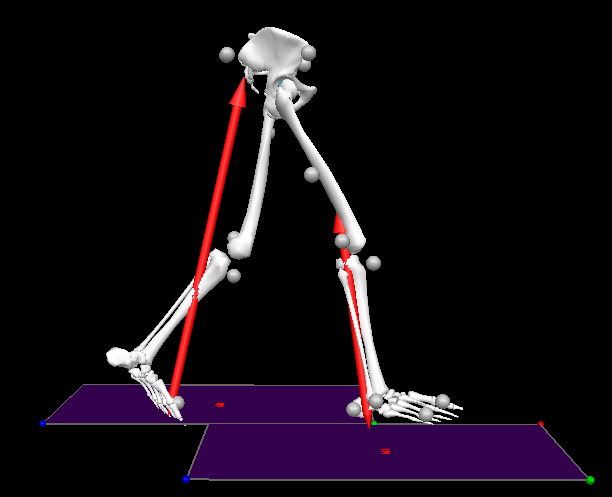
The three-dimensional force table system can detect the pressure between the plantar and the supporting surface (vertical, left and right, front and rear) when standing or walking, running and jumping. By measuring and analyzing these pressure data, biomechanical information reflecting the structure, function and even the coordination of the lower limbs of the human body can be obtained.
The application of the three-dimensional force table in the design of sports shoes is an innovative and promising method. It can accurately measure the force exerted by the athlete on the shoe during exercise, and provide key data support to help designers optimize the structure and performance of the shoe.
pressure distribution
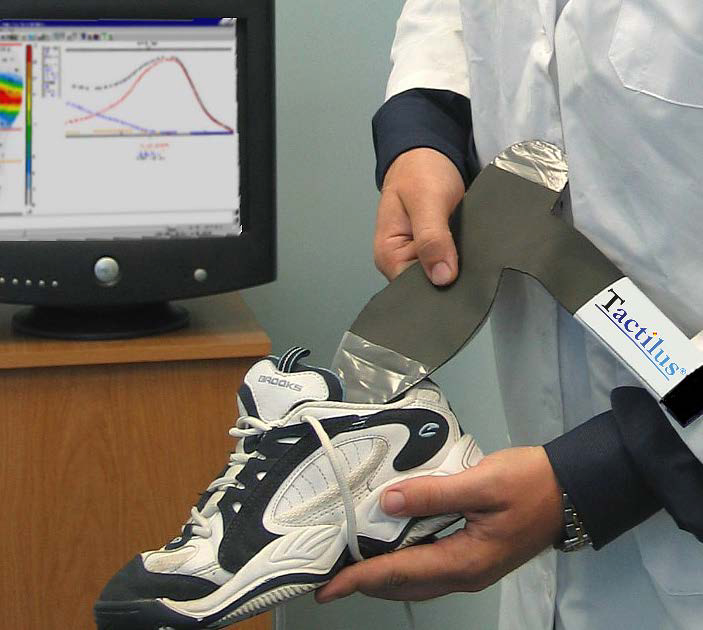
Good pressure distribution is one of the cornerstones of sports shoe design, which directly affects the comfort and performance of shoes. A well-designed pair of sports shoes can provide good support and reduce stress for athletes, thus improving sports efficiency and comfort. A well-designed pressure distribution can not only improve comfort, but also prevent sports injuries. For example, in the design of running shoes, the correct pressure distribution can reduce the impact force on the foot and reduce the risk of injury.
TEKSCAN plantar pressure measurement can be tested on any flat surface such as laboratories, offices, gyms, etc. due to its ultra-thin shape and portable design, which can reduce gait interference. It can be used for static and dynamic plantar condition and body balance analysis. It is widely used in sports biomechanics research, sports shoe design, gait analysis, balance analysis, diabetic foot testing, lower limb bone and joint diseases and other clinical and scientific research fields.
Personalization is also an important trend in stress distribution design. By understanding the athlete's foot shape and exercise habits, the pressure distribution of shoes can be customized to provide comfort and performance that better suits individual needs. This personalized design can not only improve the adaptability of sports shoes, but also improve the user's experience satisfaction.
Pressure sensing paper
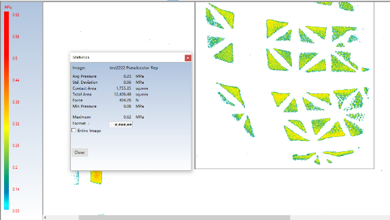
Place the PressureFilms pressure sensing paper between the two contact surfaces, apply pressure or impact force, remove the sensing film, and the pressure distribution effect on both surfaces can be presented. PF is very thin and elastic (0.2 mm), and its characteristics can be applied to a variety of curved surfaces. This product is ideal for use in some difficult-to-access, extreme environments and limited spaces where varistors are not easy to measure.
PressureFilms pressure sensing paper can reach the pixel level of the picture, restore the real contact area of the sole pattern of sports shoes, and the pressure difference of the pattern details. It can be applied to the design and development of the sole pattern of basketball shoes, tennis shoes, running shoes and other shoes to improve the anti-slip and grip performance of sports shoe products.
MatchID full field strain and displacement test system
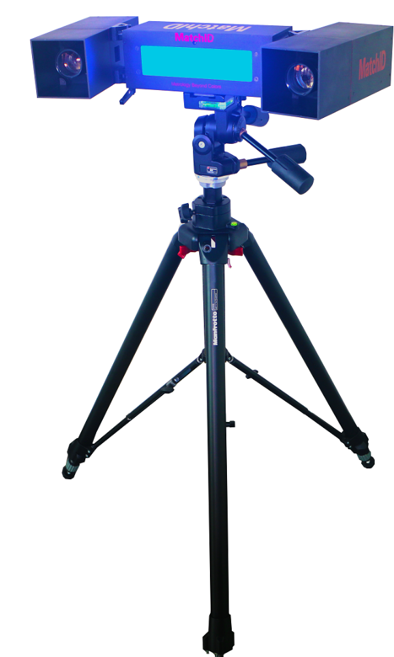
MatchID-2D3D full-field strain measurement system can realize the full-field 3D displacement, deformation and strain measurement of the surface of vibrating objects. Its application fields include material mechanics, fatigue and fracture mechanics, structural mechanics, impact mechanics, vibration mechanics, micro-nano mechanics, biomechanics, etc.
Through the results of biomechanical testing, designers and manufacturers can learn about the performance of sports shoes in different aspects, thus enabling design optimization and improvement.
For example, in terms of support performance, sole hardness, upper material and structure can be adjusted to provide better support effect; in terms of cushioning performance, more suitable sole material and structure can be selected to reduce the impact of ground impact on the foot; in terms of stability performance, sole design and material can be optimized to provide better stability. In addition, biomechanical testing can also help designers and manufacturers understand the performance requirements of sports shoes in different sports scenarios, so as to customize the design according to the needs of different athletes.



 The browser own share function is also very useful~