Information interaction design has long been deeply ingrained in our lives. It has not only changed our way of life, but also profoundly affected our entertainment methods, especially in the field of somatosensory games. With the popularization of 5G technology and the advent of the 6G era, the future of interaction design will pay more attention to the perfect combination of design and technology, bringing us an unprecedented immersive experience.In the future, through somatosensory gaming technology, players can freely perform various operations in the virtual world without the need for traditional game controllers, just by gestures, postures and even eye movements. Imagine wearing a VR headset in your living room and being instantly immersed in a mysterious tropical rainforest. You can pick fruits with gestures, or move through the jungle through physical movements, as if you are really adventuring there. This highly immersive gaming experience not only enhances the fun and interactivity of entertainment, but also allows people to exercise in the game, achieving a win-win effect of entertainment and health.
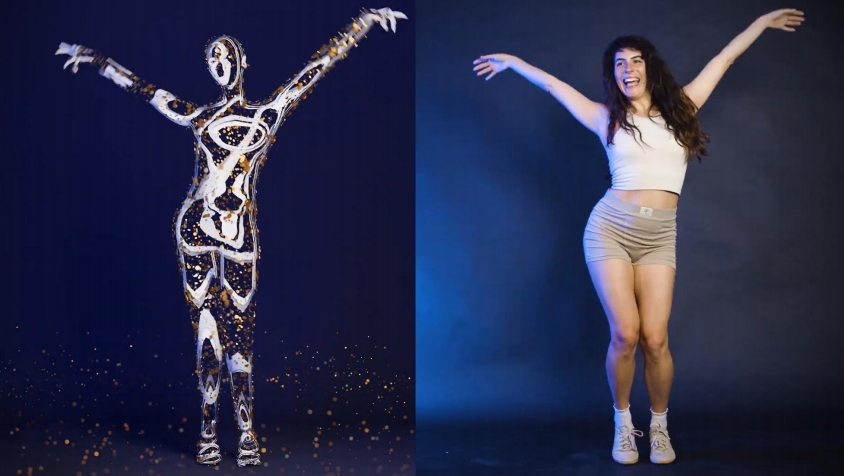
With the continuous advancement of interaction design technology, somatosensory games will no longer be limited to family entertainment, and this technology will also be widely used in schools and training institutions in the future. For example, through somatosensory interaction, students can conduct chemical experiments in a virtual laboratory, or learn historical knowledge by recreating simulated historical scenes. This lively and interesting way of learning will greatly improve students' sense of participation and learning effect. In addition, with the support of 5G and 6G technologies, somatosensory games will also realize more social functions. Wherever you are, you can have adventures, competitions, and even hold virtual parties with friends from afar in the virtual world to experience unprecedented intimate interactions.
The combination of information interaction design and somatosensory games will open up countless innovative possibilities. The deep integration of design and technology will not only make our lives more convenient, free and colorful, but also revolutionize the way we entertain and educate, bringing us a more dynamic and imaginative future.
Connecting the digital world
Marker-free motion capture system is a technology that captures human motion data without placing any marker points on the human body. Compared with traditional marker-free systems, marker-free systems utilize computer vision and deep learning algorithms to directly capture human body poses and motion trajectories through cameras.
The unmarked jog capture captures the player's body movements through cameras or sensors, and then converts these movements into in-game character movements or actions, which allows players to participate more directly in the game and enhances the immersion and interactivity of the game.
For example, some somatosensory games may use unmarked jog capture technology to track a player's arm, leg, or body movements, allowing players to control in-game characters or perform gameplay actions by waving their arms, jumping, or kicking. This technology can make the game more physical and realistic, allowing players to experience the fun of the game more immersively.
In addition, unmarked jog traps can also be used to identify player gestures or movements to trigger specific game events or actions. For example, in some somatosensory sports games, players completing specific movements or postures may trigger special skills or movements in the game, thus increasing the depth and strategy of the game.

Application of non-marking jog trapping in somatosensory game design
Improve user experience
Convenience and comfort: Traditional markerless systems require players to wear a custom motion capture suit and install markers, which is not only time-consuming but can also affect comfort. Markerless systems capture motion directly through the camera, greatly simplifying the process. Markerless systems provide more immediate motion feedback, reducing latency and improving player fluency and game response speed.
Immersion Enhancement: Through advanced computer vision and AI technology, the marker-free system can more accurately capture the player's natural movements, including subtle gestures, expression changes, etc., making the performance of virtual characters more realistic. The use of simultaneous capture and fusion technology of multiple cameras can achieve all-round tracking of player movements, avoid blind spots and dead ends, and further enhance the immersion experience.
Expanding game genres and scenarios
Diversified Interaction: Developers can design a rich gesture control system that allows players to control the game through simple gestures, such as waving, grabbing, throwing, etc. The unmarked jog capture can capture complex movements of the whole body, such as running, jumping, rolling, etc., suitable for sports, dance and action Adventure Games.
Scene adaptability: In the family living room, high-quality motion capture can be achieved through the home camera, which is suitable for family members to play somatosensory games together. Large-space somatosensory games suitable for outdoors, such as AR games and outdoor fitness activities, can be played in natural environments.
Simplify the development process
Rapid prototyping development: Marker-free systems reduce reliance on complex hardware, allowing development teams to focus more on software and content development, accelerating game prototyping and iteration. With AI and machine learning technology, captured motion data can be automatically processed and analyzed, reducing manual intervention and improving development efficiency.
Cross-platform compatibility: Marker-free systems usually support multiple devices and operating systems, such as PCs, game consoles, mobile devices, etc., which is convenient for cross-platform porting and promotion of games. Many marker-free systems provide rich APIs and SDKs to facilitate secondary development and integration by developers, improving development flexibility.

Future changes and development trends
Technological advancements and cost reductions
Deep learning and AI technology: With the continuous optimization of deep learning and AI algorithms, the accuracy and speed of marker-free motion capture will be greatly improved, enabling more accurate recognition of complex movements and multi-human interactions.
Hardware upgrades: Advances in camera and sensor technology will further enhance the capture effect, such as the application of high frame rate cameras and 3D depth cameras.
Large-scale production: As market demand increases and technology matures, the hardware cost of non-marking systems will gradually decrease, making this technology more affordable.
Open-source solutions: An increasing number of open-source motion capture software and tools are emerging, enabling developers to use these technologies at low cost.
The merger of augmented reality (AR) and virtual reality (VR)
Full-body tracking VR: Combined with marker-free motion capture technology, VR systems can achieve full-body tracking, allowing players to accurately reflect every movement in the virtual world, greatly enhancing immersion.
AR interaction: In AR games, marker-free systems can capture player interactions with the real world, such as interactions with virtual objects, multiplayer collaboration, etc., to create a more realistic and interactive gaming experience.
Virtual-real integration: The non-marking point system can achieve seamless integration of virtual and reality, such as superimposing virtual characters and objects in real-world scenes to enhance the realism and fun of the game.
Multi-user interaction: Enables multiple people to interact and collaborate in the same virtual space, enhancing social experiences and teamwork.
Personalization and socialization
Motion data analytics: By analyzing player movement data, games can provide personalized content and challenges, increasing the appeal and stickiness of the game.
Custom characters: Players can create personalized virtual characters by customizing their movements and postures, enhancing their sense of engagement and immersion.
Multiplayer games: The non-marking point system makes multiplayer interactive games more natural and fluid, such as dance and sports games, adding to the social nature of the game.
Virtual community: Players can engage in social activities in the virtual world, such as parties, competitions, cooperative tasks, etc., enhancing the sense of community and user stickiness of the game.
Health and Fitness Apps
Movement monitoring and feedback: The marker-free system can accurately monitor players' fitness movements and provide real-time feedback and correction to help users engage in more scientific and effective training.
Personalized fitness plan: According to the player's movement data and physical condition, the system can develop a personalized fitness plan to improve training effectiveness and safety.
Rehabilitation guidance: For patients who need rehabilitation training, the marker-free system can provide detailed movement guidance and monitoring to help patients perform correct rehabilitation training.
Telemedicine: Combined with telemedicine systems, physicians can monitor a patient's recovery progress through a marker-free system, providing remote guidance and adjusting training regimens.

untagged motion capture and analysis system in captury
Captury, a subsidiary of the Max Planck Informatics Institute (MPI), has been focused since its inception on developing the most powerful and easy-to-use marker-free motion capture technology. This enables their customers to rapidly deploy the technology across many different verticals. In addition to DARI's largest customer base in the healthcare market (DARImotion, the most successful commercial product to deploy the technology, has been awarded the US FDA), many international customers have deployed the technology in a variety of applications. The primary markets can be split into healthcare and entertainment, and a large number of specific use cases have been developed with customers, from virtual reality experiences to the recording of professional dance performances to biometric gait analysis and functional movement presentation for kindergarten children.
Capturylive provides a real-time, unmarked motion capture solution with unparalleled flexibility, allowing for easy full-body tracking, finger tracking, and tracking in larger spaces and with up to 5 + people, without the need for markers, wearables, or other specialized hardware.
Captury can be widely used in life sciences, game development, virtual reality, virtual live broadcast, real-time motion capture of athletes, visual effects, advertising production, film animation, etc.
Marker-free motion capture systems have broad application prospects in somatosensory game design, which can significantly enhance the user experience, enrich game content, simplify the development process, and promote the integration of AR/VR technology. With the continuous advancement of technology and the reduction of costs, this field will usher in more innovation and change, bringing players a richer and more immersive interactive experience.
At the same time, the development trend of personalization and socialization will also enable somatosensory games to play a greater role in health, fitness and rehabilitation training. In the future, marker-free motion capture systems will continue to play an important role in somatosensory games and other application fields, driving the entire industry forward.



 The browser own share function is also very useful~